As some of you may know, as of September 1, 2011 Physiotherapists were given the legal right to communicate a diagnosis to a patient. What does that mean? Well, before we were given this right we could tell patients what our clinical impression was, but we couldn’t come out and say “Mr.Smith you have a herniated disc at L4-L5 leading to lower limb weakness, paresthesia and pain”. As of September 1st, we are allowed to and obligated by law to give a proper diagnosis. This is what I call having “power” for the sake of this post.
So…just because we are allowed to do something, does it mean we should do it? For that disc herniation example I just mentioned, would it be smart to tell Mr. Smith that’s what we think they have? The correct answer is it depends. If the disc herniation was severe leading to constant/sever pain, drop foot, weakness, or worse..cord signs, we MUST tell them this is what they have and send them right away for medical care. However, if this same client comes to me with a pain that travels down the back of their leg from their butt area, and they have a positive SLR and Slump on the side of the pain, should I tell them they have a disc herniation. In my opinion, no! What good does it do to tell the patient they have a herniated disc? All it will do is instil needless fear and panic in the patient. Chances are, they will go home and google what you said and scare the crap out of themself. No one wants to hear they are broken! It’s better to say that have irritated their nerve but it is simple to fix with the right care. This
I googled “disc herniation” and look what comes up! Not good for a client to see
will not panic the patient and will not instil fear thus creating a cycle of what could turn into chronic pain. Also, it gives you instant credibility because you are calm and collected which makes the client trust every word you say…and rightfully so!
Overall, if a client comes in with an acute ATFL sprain then yes, it’s fine to diagnose that…but don’t make things worse than they need to be. Don’t say “wow, your ankle is a mess”, or ” That looks bad!”. It’s just not productive and will not yield optimal clinical results.
Please Be careful what you say…you have power!
Watch the following video for a great explanation of why common place ideas about back health are flat-out wrong. The man is cocky, but he knows his stuff!! Watch and learn 🙂
As a physiotherapist I was taught to stretch what is tight and strengthen what is weak. This is the model many therapists of all disciplines share and often obey. However, newer evidence has shifted the thought process a bit in terms of how we stretch and if we even should at all…the work of Grey Cook, Janda, Shirley Sahrmann, and Paul Chek among others has changed the landscape of stretching. I will use my own interpretation of the literature to explain in layman’s terms why stretching a “tight” muscle may in fact be the exact opposite thing you want to be doing…
Research has shown that when muscles get long they become what is known as facilitated. A facilitated muscle is one in which it receives too much neural input from the nerves that innervate it. Theories as to why this happen very. But my opinion is that long muscles get facilitated as a protective response from the body. The body is saying “this muscle is too long and might tear if pushed further so I (the brain) will increase the neural input to that muscle to keep it at a constant and steady state of increased contraction”. This increased contraction is supposed to prevent any damage to the elongated muscle…hope that makes sense. This increased neural drive to the muscle makes it SEEM tight. This is why we have the desire to stretch it because it feels hard and tight when we attempt to lengthen it. However, this muscle is NOT actually tight…it’s TENSE. There is a big difference between a tight and tense muscle. Stretching out a facilitated (tense) muscle only serves to INCREASE this neural drive to the muscle. The reason is because (once again) the brain thinks this stretched muscle is at even further risk of tearing and therefore more neural drive must be given to the muscle to make it even tighter.
Anterior Pelvic Tilt
Therefore, STRETCHING A FACILIATED MUSCLE WILL ONLY MAKE IT TIGHTER…which is exactly oppose of what the goal of stretching was in the first place.
Here is a common example….the oh so popular Tight Hamstrings:
A major cause for hamstring tightness is due to an anterior pelvic tilt
I won’t get into the reason for the tilt now…I’ll save that for another post lol
This anterior (or forward) tilt creates a further distance for the origin and insertion of the hamstrings. The ischial tubersosity on the back of the pelvis (origin) and posterior tibia and fibular head (insertion) get pulled further away from one another due to this pelvic tilt thus making the muscle group longer (see picture of hamstring origin and insertion)
Also, the anterior tilt places the body’s center of gravity forward slightly (also happens with forward head posture). The body doesn’t like feeling off balanced so it sends messages to the calves and hamstrings to tighten up to keep the body from falling forward…the calves and hamstrings act as pulleys to keep the body from going forward in the presence of a forward head posture and or pelvic tilt
The elongated hamstrings group in this cause becomes facilitated because of the pelvic tilt making the muscle longer. The body responds to this my increasing the neural input to the hamstrings to tighten them up (even though they are already long!). Therefore, it makes NO sense to stretch these “tight” hamstrings because that will only create more neural drive and thus more muscle “tightness”. The key to fixing the hamstring length issue in this case has nothing to with the hamstrings at all. It has to do with correcting the pelvis alignment so the hamstring origin and insertion (where the muscle starts and ends) is at a more optimal position to turn off this constant neural input.
“Find the cause and fix the problem”…..
Thanks for all the support I’ve been getting. I love what I do and hope these articles help other therapists and the general public understand and appreciate the complexity of the human body!
As always, comments and questions are ALWAYS welcome 🙂
“functional training” is now the standard for exercise programs these days. We all hear about sport specific training for sport specific results. While I think many of these concepts are great, I do think much of it is overkill. I may offend a few people here, but I feel like many trainers have “brainwashed” young athletes and their parents into thinking that they need to do highly specific and tailored training programs for little Johnny to make the NHL. All kinds of gizmos and gadgets have been produced to supposidly give athletes the “competitive edge”…just walk into any golf store and see the amount of complete rubbish there is out there. Ironically, the nature of golf is such that those that play the sport often have a little ( or a lot more) expendable income then those that play other sports. Funny how their are sooo many “must have” items being sold to golfers…i’ll let you draw your own conclusions as to why.
How does all this relate to physiotherapy? It is my contention that no amount of sport specific or functional training will drastically help an athlete improve their game until their fundamental biomechanics are correct. You can’t build a house without first constructing a solid base…same goes for people! You can’t train a body if the body isn’t in a position to be trained…well you can, but the results will be minimal at best…and here is where i start my shpeal on WHY we develop low back pain and why training before correcting the WHY is a waste of time..and money!
Clearly the bulk..i’d say about 75-80% of low back pain (LBP) patients I see cannot identify a particular offending event (no specific injury). Ironically, the onset of LBP is often associated with the very simple act of bending forward.
If there is no singular event then it must be what we do day in and day out that triggered the pain (the foundation of the house isn’t where it needs to be). If we can identify the cause of the pain, then logic assumes we can eliminate the consequence–back pain
In its simplest form, the body is a series of body parts linked together. Each segment has a specific role and influences its neighboring segments.
The ground breaking work by Mike Boyle and Gray Cook, both respected trainers and therapists respectively, have developed a system that assigns either a stability or mobility role to each segment. These responsibilities alternate as one progresses from the feet to the head….called the Joint by Joint Theory
For example, the body starts out with a stable foot followed by a mobile ankle, a stable knee and mobile hip, a stable lumbar spine(low back), and a mobile upper back..etc
Issues arise when links or body segments assume an inappropriate role-that is a mobile segment becomes restricted or stable. This then forces the segments above and below that area to change their role. For example: When our hips get tight (from sitting so damn much) we have to find a way to keep our body mobile. Our body does this by forcing the low back to move from a stable are to mobile area. This places stress on areas that shouldn’t have stress and a whole cascade of events can unfold…leading to pain.
Remember that song we learned as kids…” the shin bone is connected to the leg bone, leg bone is connected to the hip bone…” That song was right on the mark…everything is connected!!!
When the low back moves too much we develop pain in the back but possibly in other areas as well (neck and shoulders..even knees). It therefore makes little sense to me, to train an unstable area using mobile activities..such that are done in hockey and golf training. We must first fix the biomechanical problem before we can allow mobility drills to be done…functional rehab at its best!
There are many things that can be done to fix seemingly unrelated problems. These include manual therapy, soft tissue release, postural reeducation and of course corrective exercises. If you are in pain and don’t know why, chances are something is “out of whack” and needs to be looked at.
It’s been a while since I posted an article or “blog” post on my page. I just finished a few courses and needed to spend time doing a few other things over the weekends so writing took a backseat. Now I’m happy to report that I’m back and will start writing weekly posts again!
Today I would like to talk about on of my favourite joints (Yes, I said favourite joint) in the body…the shoulder complex! There is so much stuff going on in the shoulder and rehab and treatment of shoulder pathology can be a tricky process. For starters, most people come to see me with shoulder pain after having the issue for months (or even years!) and they expect me to magically do something to their shoulder for the pain to go away…sigh. Short of an acute injury to the shoulder, most issues stem from muscle imbalances which occurred from over use, postural issues (a big one!), or a combination of many biomechanical factors…which take time and diligence to go away.
The discussion on how to assess the shoulder and surrounding area is beyond the scope of this post. I will simply state a few clinical “pearls” that often help with what is commonly known as subacromial impingement. When you get that “pinch” in your shoulder when raising your arm overhead, you may have the condition that I’m going to be talking about now.
So what do I do about this problem…2 things come to mind first.
1) Address the thoracic spine (or midback)!!! If you have a crappy sitting posture and lean over a desk all day, chances are you will get shoulder issues. Why? Simply put: you are slowly closing off the space that shoulder has to move. Here is a nice little Youtube video describing the condition:
2) Strengthen the shoulder force couples:
Most of us are upper trap dominant and lose the ability to fully contract the lower traps and serratus anterior. If this happens, our arm bone will go up when we lift up our arm, but the shoulder blade will lag behind causing the bones to but up against one another as seen in the youtube clip above.
How do I treat a classic subacromial impingement? I usually start my addressing biomechanical factors such as thoracic spine mobility. Manual therapy including mobilization, manipulation, ART, myofascial release, and PNF stretching work well to that end.
But the REAL work is on the clients end. Some conditions respond well to passive care such as tension headaches or ankle stiffness (with exercises done as well). But shoulder issues are 90% on the patient and 10% on the therapist. That means I’m just the coach with these types of patients. I direct my patients on what to do and how do to the exercises and it’s up to them to adhere religiously to the program. It’s sad to say that this is why many shoulder clients fail to achieve maximal results…cause many want a “quick fix” which isn’t always possible.
Based on research and what I see clinically, here is a list with youtube links to common exercises I give to restore proper scapular stability and kinematics
1) Pushup plus:
This exercises targets the serratus anterior muscle. The job of this muscle is to aid in scapular upward rotation, protraction and keeping it firm to the ribgage. A weak serratus anterior can result in scapular winging (h)
2) Lower trap “Y” raises:
This exercises can be done on a flat table but doing it on an incline helps reduce the chance of arching through the low back while completing the exercise. NOT a lot of weight (if any) is needed to do this exercise well
3) Scapular “W” retraction/external rotation/posterior tipping exercise:
This is my new favourite exercise because it works so many things at once. It really gives you bang for your exercise buck! This simple yet highly effective exercise works the scapular retractors (rhomboids/middle traps), external rotators ( Teres Minor/Infraspinatus), and posteriorly tips the scapula which conteractes a tight pec minor which acts to anteriorly tip the scapula…which is a bad thing!
4) The classic row exercise:
With so many of us sitting in front of computers all day with slouched posture, doing upright rows to promote scapular retraction is critical. It also helps with thoracic spine extension!
5) Dynamic Hugs:
this exercise also works the serratus anterior but is less intense then the pushup plus. I give it to my older clients with shoulder issues or those who can’t get into a pushup position.
These are starting point exercises for those with classic subacromial impingement. Overhead athletes will require more “functional” exercises since there shoulders usually have specific adaptations to the demands placed upon them from the game. Along with exercise, I often employ a stretching program since I find the posterior capsule to be an issue with many people who have shoulder pain. I also use my manual therapy skills to help restore motion and try to help with immediate pain reduction (not always successful) haha.
For a GREAT refernce on shoulder issues and to get an understajnding of where many of my exercise ideas come from please visit www.mikereinold.com
Mike Reinold it an athletic therapist and physiotherapist for the Boston redsox and his posts on his site are great! I read them weekly.
Please comment with anything you do for your shoulder clients. It’s all good in my books.
Ok, here it is…part 2 of it’s all in the hips. In my last post I discussed the importance of strong gluts for the prevention of knee pain. I explained what the glut muscles do and what happens when they go wrong. Suffice to say, there would be a lot less “pattelofemoral” pain patients in the world if we all worked on strengthening our hips!
Before I begin I want to say that the following exercises are for beginner to intermediate athletes and for those who have knee pain that COULD be attributed to the hips. Like I said in my last entry, there are other factors to knee pain but in any case, there is nothing wrong (or unsafe) about training the hips so I’m confident I wont hurt anyone by giving them some tips and videos. PLEASE note: don’t assume that these exercises will “cure” you of knee pain. I will always always always recommend getting a specific assessment by a trained professional such as a physiotherapist or chiropractor to determine the exact cause of your problem…you knew that was coming lol
Here is a list of exercises I like to give my patients with weak hips that are causing knee and low back pain:
1) The single leg bridge:
This exercise is great for 2 reasons. First and foremost, it strengthens the glut max (butt muscle) on the weight bearing side very well if done correctly. Secondly, this exercise is single leg and as such, the glut medius and minimus are working to control the non weight bearing hip from dropping down to the side. If this exercise is too hard to do..i.e you cant lift up high enough to make your hips level, you can do the double leg bridge…same idea as this, but you use 2 legs to bring your butt up instead of just one.
2) The “telephone” book exercise:
This exercise is tricky and is hard to explain in writing. Basically, you stand on a step (or telephone book lol) with one foot. You drop the other foot that is not on the step down my lowering the hip on that side. You then have to focus on contarcticing the glut med muscle on the weight bearing side to hike up the hip on the non weight bearing side. It’s best to hike the hip up higher then the hip on the weight bearing side for maximal benefit…don’t bent the knee on the weight bearing side much because that is cheating
3) Side lying hip abduction:
This one Is self explanatory…but here are a few key points to know:
a) When raising the leg up, do NOT let the hips roll back. You must try and keep the shoulder, hip and knee parallel. Keep your hand on your hips to sense if they are falling back or not…or do the exercises in front of a mirror if possible.
b) People with weak gluts will cheat in this exercise by using the hip flexor muscle tensor fascia lata (TFL) to raise the leg up instead of using the glut med. You will know this is happening because instead of keeping the leg straight out beside you (or even a little bit extended is best) the leg will come forward…you will flex the hip while abducting the leg because the TFL will do the work for the lazy gluts!
In the video, he uses a plastic band around the ankles to increase resistance. That is a good idea, but poorly executed. The band should ideally be just below the knees for maxiaml effect…having the band around the ankles is a) too hard and b) promotes the use of the TFL over the gluts
4) The Bird Dog:
The dude in this clip actually does a good job of explaining the exercise and common mistakes that are made. Just watch the clip and do what he says 😉
I know the video says this is a killer abs exercise (and it is)…BUT, this exercise is also a great glut max exercise and glut med stabilization exercise. It’s kind of advanced but I thought I’d throw it out there.
To make it easier—Don’t involve the arms. Just extend the legs out one at a time. Hold the leg out in an extended position for 10 seconds, bring it back down, and then do the other leg. This will still target the gluts but won’t do as much for the abs or back..
Do each of these 4 exercises 10 times. That is one set. Do 3-4 sets per day of each. If you develop pain while doing ANY of these exercises, STOP right away!! No need to hurt yourself here haha
As always, feel free to ask any questions you want. There are many more great glut exercises out there (squats, deadlifts etc), but these are the ones I find work well for the majority of people I see. For a personalized exercise program see a trained professional!
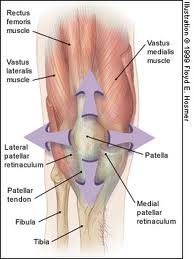
Have you ever had knee pain? This could be from running, playing sports, or dance training. If you said yes to this, you are definitely not in the minority on that one! Of all the lower extremity joints, the knee sustains the highest percentage of injuries, particularly among physically active people. For example, the knee has been reported to be the most common site of overuse injuries in RUNNERS, triathletes, and basketball players (1). For all the women reading this, I am sorry to say that you have a much greater incidence of knee pain as compared to males…there are reasons for this I won’t get into now because it’s not relevant….but if you want to know, write it in the comments section
Let me start by saying there are MANY causes of knee pain and this article will NOT address all of them. However, this article will talk about a VERY common finding that often translates into anterior (front) knee pain, lateral (outside) knee pain, and even medial (inside) knee pain. If you take only one thing away from this article, this should be it…many causes of knee pain have NOTHING to do with the knee at all. I am tired of seeing therapists (of all disciplines) treating knee pain with ice, ultrasound, rest and mini squats wile squeezing a ball between the knees to train the VMO (inner quad muscle). Those treatments directed at the knee do nothing for the CAUSE of the problem and are only treating the symptoms…which will yield less then stellar results for the patient.
Current research is leading to the conclusion many of the overuse (running etc) conditions of the knee are not conditions of the knee at all. Many types of knee pain may be related to poor stability at the hip, but present as knee pain. The analogy frequently used to describe why this occurs is the rope analogy: If I put a noose loosely around your neck, stood in front of you and pulled on it, you would tell me that the back of your neck hurt, if I stopped pulling, the neck pain would disappear. Nothing was ever really wrong with your neck –the neck was simply the endpoint at which you felt the pain….same goes for the knee!
Quick anatomy lesion: you have muscles on the sides of your hips called glut medius and glut minimus Along with the glut max (butt muscle), these muscles work to keep your hips level in single limb stance and they also work to control how far your femur adducts (goes towards midline) and turns in (internal rotation)….this adducted and internally rotated position of the knee is called valgus knee stress
Soooo who cares about gluts this and gluts that?…I want to know about KNEE PAIN! I venture a guess some of you maybe saying that, but those silly gluts have everything to do with knee pain. Unfortunately, our population is dominated by sagital plane strength (we do everything in the forward and backwards position) and weakness in the frontal and transverse plans (side to side and turning motions)….in other words, we are typically strong when we bring our knee to our chest (sagital plane), and weak when we bring ours legs out to the side (frontal plane)…which is the job of those damn gluts! Even more unfortunate is the fact that exercise outside the sagital place are often neglected in rehabilitation and strength training programs (2). This creates a problem because we don’t train those oh so important glut muscles that control our hips and therefore control how our knees move.
LONG story short: when we have weak gluts we tend to place our knees in very stressful positions when running, walking, jumping, and weight training (squats!). This valgus stress places excessive force on certain parts of the knee causing what is commonly called patellofemoral pain syndrome (PFPS). This leads to the pain that is felt in the knees after a long run, playing a game of basketball, or skating in hockey. Therefore, training the gluts to align the hips and keep the knees in a more optimal position during single leg activities will SIGNIFINTLY reduce the incidence of knee pain..and keep the pain away!! (who needs Advil or Tylenol when all you need is some specific rehab directed at key muscles to end pain?) Research also shows that strengthening these hip muscles can actually reduce the likelihood of athletes tearing the ACL of the knees…..the hip muscles are IMPORTANT!
If you want me to write another piece on HOW TO train these hip muscles please comment on this article! ANY questions, comments, criticisms are more then welcome.
Thanks for reading!
References:
1) Journal of Orthopaedic and Sports Physical Therapy: The influence of abnormal hip mechanics on knee injury: A biomechanical perspective. February 2010, volume 40, number 2
2) Mike Reinol.com: Solving the patellofemoral mystery: page 31-32


 jessephysio